

You Will Fail. Why Not Embrace It?
Part 2 of The Unexpected Benefits of Fear, Conflict, Failure, and Resistance

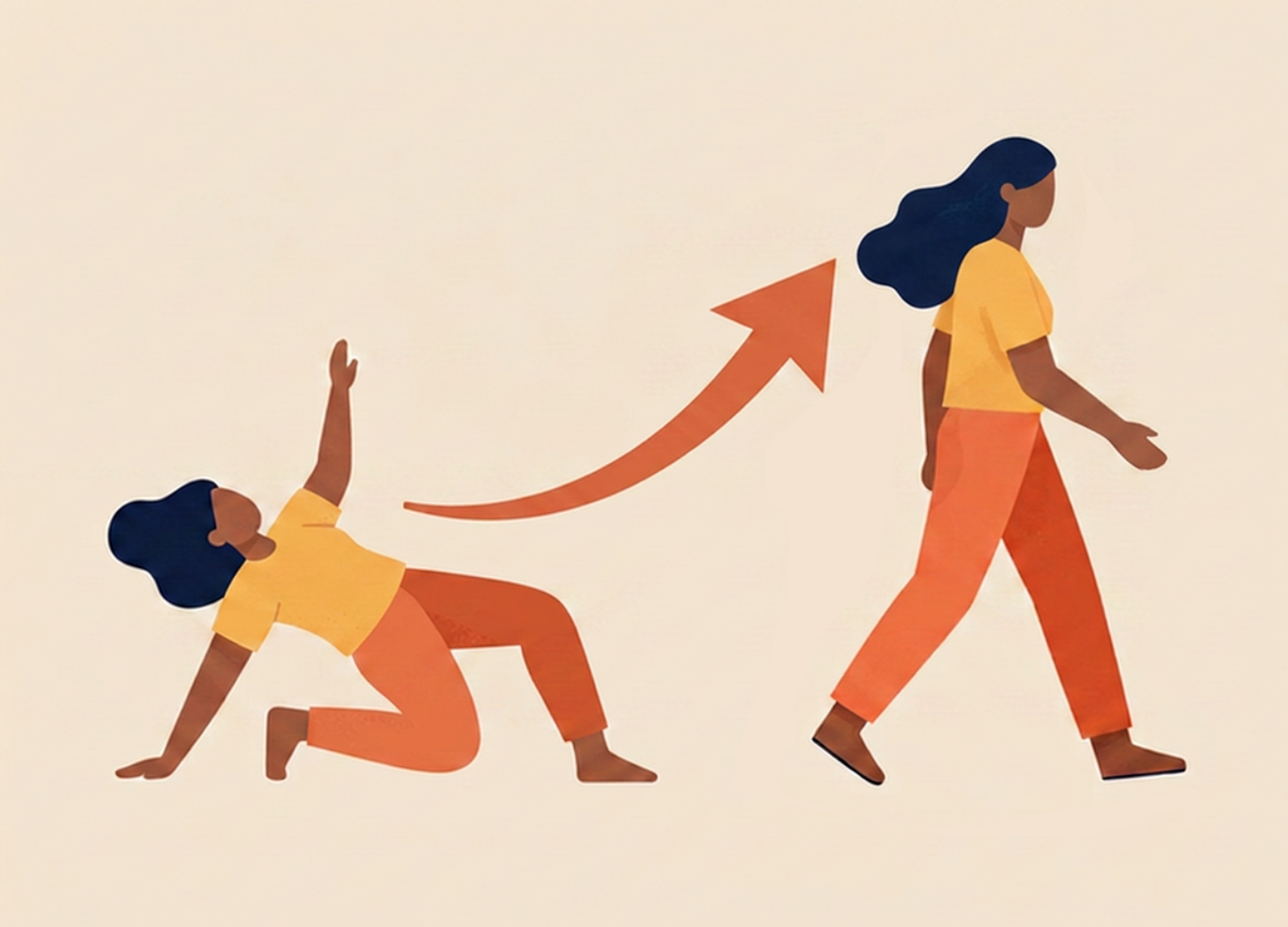
In this series, I explore what we at CoCreative call “the Baddies.” The problem is not fear, conflict, failure, or resistance themselves, but the unhealthy relationship we’ve developed with each of them.
Part 2: You Will Fail. Why Not Embrace It?
Part 3: What If the Conflict IS the Breakthrough?
Part 4: That Pushback You’re Getting? It’s Trying to Help You.
A Story About Risk
In 2013, my colleague Jim Scully of ThinkPlace New Zealand and I were leading a workshop at UNDP with their innovation team, as part of a series to help one of the world’s largest development organizations develop mindsets and skillsets around social innovation. We were using a creative tensions framework to help the group explore the polarities inherent in their work.
One of those polarities was Safety and Risk: how do you minimize the risk of harm to people and communities while trying new approaches and strategies? That morning, the group had been mapping that tension, exploring how safety and risk, when managed well, are not opposites to be traded off against each other but interdependent values to be leveraged together.
Just as we paused for lunch, Jens Wandel, then the Assistant Secretary General of UNDP, asked whether he might have a few minutes to address the group after the break. We said no (kidding!).
When we regathered, Jens told the group that the morning’s work had made something clear to him: UNDP had been systematically embracing safety to the neglect of risk, and that without developing a healthier relationship with risk, their innovation efforts would fail to thrive. He paused, then said: “So starting today, we’re going to change the way we engage with risk. Instead of trying to eliminate risk in our work, we’re going to clearly declare the risks of any new initiative, as clearly as we can, and implement strategies to monitor and manage those risks.”
The effect on the room was palpable, something close to a collective sigh of relief. People shared their excitement that, after years of feeling they had to avoid any risk at all costs, they finally had permission to try things, even if they might not work at first.
That moment has stayed with me. What Jens named that day was a much-needed pivot: the greatest risk to UNDP’s innovation work wasn’t failure. It was the fear of failure and the culture of risk-avoidance it had produced. As Ashley Good, founder of Fail Forward and one of the world’s leading thinkers on productive failure, puts it, “What is the risk of staying the same?”
As Ashley Good, founder of Fail Forward and one of the world’s leading thinkers on productive failure, puts it, “What is the risk of staying the same?”
What Failure Actually Is
As my teacher John Carter at the Gestalt OSD Center has said, failure is simply not getting the outcome we expected. It’s the gap between intention and result, a disruption of our assumptions about how things work, or will work. And like fear, conflict, and resistance, it is inevitable in any work that’s worth doing.
In the work I support to shift complex, human systems to work better for all, failure isn’t just likely, it’s basically guaranteed. Complex systems have adaptive and emergent properties that defy reliable predictions. Every intervention is, at some level, an experiment, a hypothesis being tested against a system that will not hold still. I often tell people that if they’re taking on any truly complex challenge, they will fail. And if they don’t fail, they’re probably not trying hard enough. The question is never whether you’ll fail, but how you fail and, more importantly, how you learn from it.
The only truly unproductive failure is giving up. It’s when funders pull back funding precisely when real learning is just starting, when the most important assumptions are finally being challenged. It’s when we absorb failure as a verdict on our identity or efficacy rather than as information about our assumptions or strategy. Productive failure, by contrast, is failing fast and cheap, learning from what didn’t work, incorporating that learning into what comes next, and keeping going. Good calls this “intelligent failure”: failures that result in useful learning, allowing us to move forward more wisely.
The only truly unproductive failure is giving up.
An Unhealthy Relationship with Failure
In my experience, an unhealthy relationship with failure often stems from a linear view of progress, where success is the destination and failure is going backwards. From that view, failure becomes something to move away from, hide, or recover from as quickly as possible rather than something to expect and learn from.
When we hold this view, we stop taking risks that will meet the challenge, sticking with what’s familiar and comfortable. We’re less willing to offer the risky idea or try the untested approach, and we likely won’t admit when something isn’t working. We can develop an idealized image of ourselves as competent, decisive, and on track, even when none of these are totally true.
In collaborative settings, this dynamic is particularly unhelpful. Groups that can’t metabolize failure tend to stop experimenting. And groups that stop experimenting in complex systems tend to keep doing the same things, maybe more efficiently, but they’ll keep seeing the same results.
Note, though, that failure is not equally risky for everyone. For me, as an older white man with some professional standing, a public stumble carries relatively manageable consequences (or at least that’s my story now). For a younger person, a woman, or a person of color, the same failure is more likely to be attributed to identity or competency rather than circumstance, and the reputational cost is often significantly higher. Creating conditions in which everyone can fail safely, courageously, and equitably is key to allowing everyone to fully contribute so we get the best of our collective thinking and risk-taking.
How to Make Failure Work for You
One of the most practical things a collaboration can do to develop a healthier relationship with failure is to prototype early and often, and to be deliberate about what kind of prototype serves the moment.
In the early stages of developing any new strategy or idea, the goal of prototyping isn’t to design the solution but to learn. According to my colleague Laura Weiss, who initiated the service design practice at IDEO, “Lo-fi” prototypes are Rough, Rapid, and Right. Rough just means good enough (one of my favorite phrases as a facilitator), built from whatever materials are at hand, with no emotional attachment to the result. Rapid means iterable, cheap, and designed for fast feedback. And Right means focused specifically on what you most need to learn next, built only as far as necessary to meet that specific learning objective.
Some discipline is important here. A prototype is not a plan to do something, a discussion of possibilities, or a slide deck explaining what you would build. It’s a model of the thing itself, made quickly and cheaply enough that failing with it teaches more than it costs. As we invite people into a prototyping process, we put it bluntly: “Don’t plan it, don’t discuss it, don’t talk about it. Make it.”
This reframes failure in some fundamental way. When we prototype early, failure isn’t a setback; it’s actually kind of the whole point.
This reframes failure in some fundamental way. When we prototype early, failure isn’t a setback; it’s actually kind of the whole point.
Think of a prototype as a null hypothesis made concrete, an assumption about what will work, designed specifically to be tested and, ideally, disproved. Scientists have long understood that we learn more reliably by trying to disprove things than by trying to prove them. After all, confirmation bias is powerful and pervasive, and designing for disconfirmation runs helpfully against that grain. Each failed prototype eliminates a wrong assumption, reveals an unmet need, or surfaces a constraint we didn’t know we had. That’s not failure in any meaningful sense, but the scientific method working as intended.
Brené Brown, writing about Ashley Good’s work in Rising Strong, captured the essential distinction: there’s a vast difference between how we think about the term failure and how we think about the people and organizations brave enough to share their failures for the purpose of learning and growing. Lo-fi prototyping builds exactly that kind of organizational courage, in small, low-stakes, repeatable doses.
Ever seen a failures report?
See this example from Engineers Without Borders Canada, which shook up the international development community when they started producing them, and which Ashley Good played a key role in.
And this example from the Fito Network. (In full disclosure, I serve on the board of Fito, though I’m only responsible for some of those failures!)
The Benefits of a Healthy Relationship with Failure
Some beautiful and important things happen when we stop treating failure as the opposite of success and start treating it as part of a natural process of learning, adaptation, and growth:
We get clearer on what success actually requires. Every failed attempt reveals something real about what’s going on, what the system will and won’t respond to, what assumptions were wrong, and what conditions we hadn’t accounted for. That information is hard to get any other way.
We find our true allies. As hard as this is to say, when things go wrong, we learn quickly who is truly committed to the work itself and who was committed to the appearance of progress. The colleagues, funders, and partners who stay curious and constructive in the face of setbacks are the ones to keep building with.
We loosen our attachment to perfectionism. I once lost my thread completely while debriefing an exercise in front of sixty systems leaders in Toronto. I fumbled forward, stared blankly at the Lego ducks on the table in front of me (they seemed to stare back—yikes!), finally found my notes, and gradually recovered. Some people in the room probably didn’t notice. Some definitely did. What I relearned in that moment was that failure is survivable, and that the group’s trust in me didn’t depend on my being flawless. Loosening our grip on our idealized pictures of ourselves is one of failure’s humanizing gifts.
What I relearned in that moment was that failure is survivable, and that the group’s trust in me didn’t depend on my being flawless. Loosening our grip on our idealized pictures of ourselves is one of failure’s humanizing gifts.
We model something important. When a leader fails visibly, learns publicly, and keeps going anyway, they give others permission to be more vulnerable, curious, and open. That powerful combination of vulnerability and grit creates something that competence alone cannot: a courageous space in which people can bring their full effort to genuinely uncertain work.
We return to beginner’s mind. Steve Jobs, reflecting on being forced out of Apple, described it as one of the best things that ever happened to him, freeing him from the weight of his own success and letting him reconnect to his work with fresh eyes. Failure has a way of clearing the accumulated certainty that can make even experienced practitioners rigid and less adaptive.
Practices for Developing a Healthier Relationship with Failure
Okay, no single practice here will work for everyone, so what’s below are invitations rather than prescriptions. But across years of working with groups navigating difficult collaborative terrain, these are the ones I’ve seen work:
Declare the risks upfront. Rather than trying to eliminate risk, just name it clearly at the outset of any initiative. What are we assuming? What could go wrong? What would we do if it did? This doesn’t create more risk, just a more honest relationship with the risk that already exists.
Prototype early, prototype cheap. Keep the costs and stakes low in the early stages of any new approach. Build Rough, Rapid, and Right. Put a version number on everything. Treat early iterations as learning vehicles, not commitments, and resist the pull to over-invest before the core assumptions have been tested.
Be clear about what you need to learn next. Before each prototype or experiment, name the specific assumption you’re testing. What would success look like? What exactly would failure help you understand? Focused failure is far more useful than unfocused failure.
Fail well when it happens. Slow down. Admit what occurred (at least to yourself, if no one else). Look for the impacts, both negative and positive, and address them. Find the learning. Get re-grounded in the purpose of the work. Then keep going.
Don’t overlearn. Remember that one failure is one data point. Pulling back from an entire class of approaches because a single attempt didn’t work compounds the original failure rather than the learning.
Create conditions for everyone to fail safely. Be attentive to who carries more risk when things go wrong. Build the psychological safety and equity practices that allow everyone in a collaboration to take genuine risks, not just those for whom failure is easiest to absorb.
As Jens Wandel understood that day at UNDP, the goal was never to eliminate failure. It was to develop an honest, courageous, and productive relationship with it. The organizations and collaborations that learn to do this don’t fail less, but learn more. And in systems change work, learning more is how we can eventually succeed.
Next in the series: Part 3: What If the Conflict IS the Breakthrough?
If you’d like to develop a healthier relationship with failure, my colleague Issac Carter offers coaching and tools that will help. You can reach Issac through the CoCreative website. To leverage failure as a resource for your organization or team, contact Ashley’s team at Fail Forward.
Russ Gaskin is founder and co-owner of CoCreative, a consulting and training organization specializing in network weaving, systems change strategy co-design, and facilitation of multi-stakeholder collaborations.